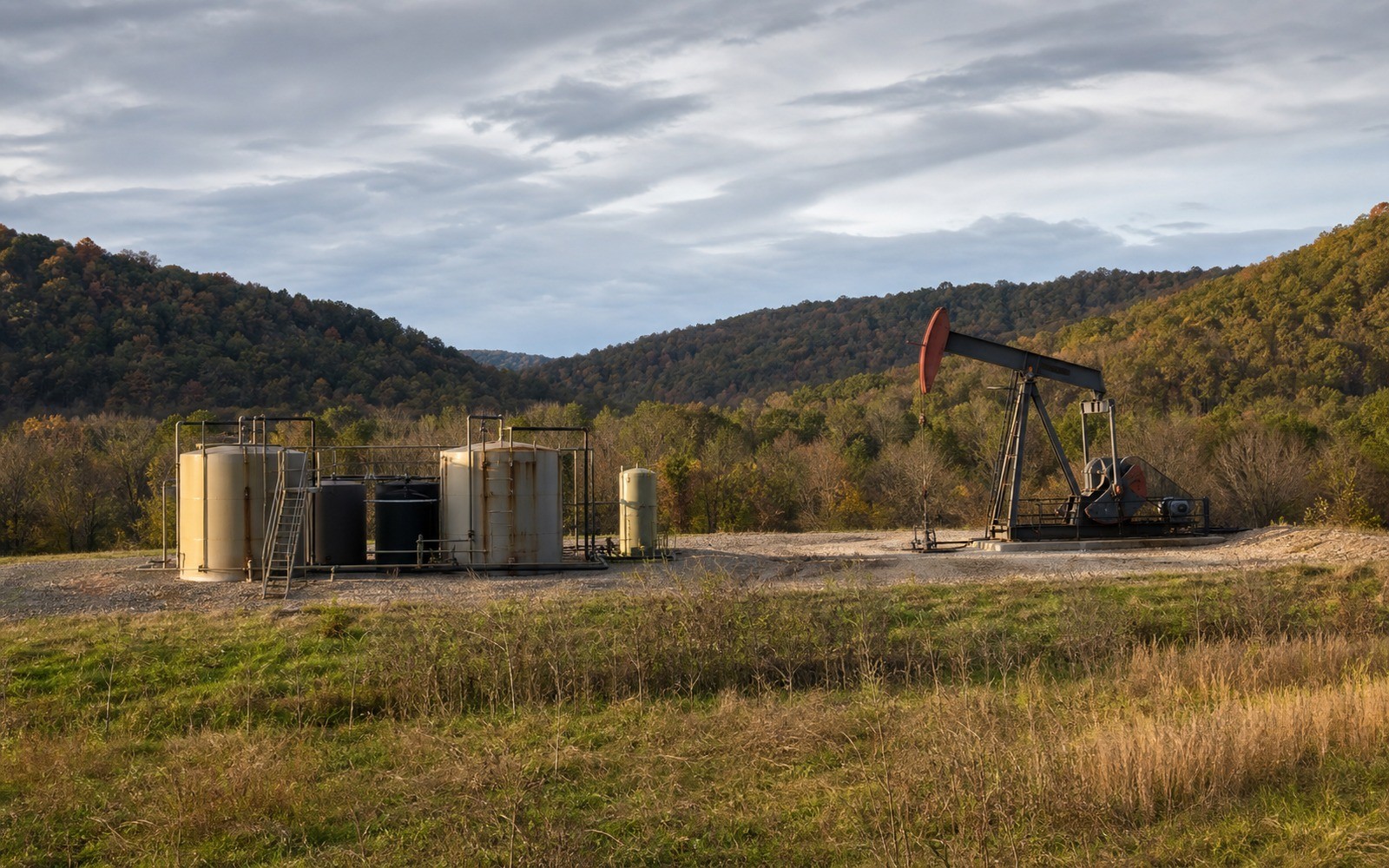
Fayetteville Shale Mineral Rights
The Fayetteville had its boom years and moved past them faster than most people outside Arkansas ever noticed, and that history matters for what your minerals are worth today.
Arkansas's Fayetteville Shale, centered on Faulkner, Van Buren, Cleburne, White, and Conway County, was one of the early-2000s dry gas shale plays that got developed hard for about a decade before operator activity pulled back sharply as gas prices softened. If you're holding minerals here, you're most likely looking at a mature, gas-weighted interest with a well-established production history rather than a speculative undeveloped tract.
That maturity is actually helpful when we're putting together an offer, because there's real data behind almost every unit in the core play, and we don't have to guess at what your acreage is capable of producing.
Dry Gas, No Oil Cushion
Fayetteville wells are almost entirely dry gas with minimal liquids, so your royalty check is tied directly to natural gas pricing with no oil revenue to offset a downturn. That's worth knowing going in, since it means the value swings you see on your statement are almost entirely a gas price story, not a broader commodity mix like you'd find in an oil-and-gas basin.
Rig Counts Dropped Hard After the Early 2010s
Drilling activity in the Fayetteville peaked years ago and has stayed low since, as operators shifted capital toward liquids-rich plays that offered better economics during periods of weaker gas pricing. If your minerals are non-producing today, that's largely a reflection of this broader pullback rather than anything specific to your tract, and it's a fair conversation to have honestly rather than pretending the play is still in a growth phase.
Producing Interests Still Send Steady Checks
Wells that were drilled during the core development years continue producing today, generally well into a long decline tail with modest, fairly predictable monthly volumes. If you've held a Fayetteville interest for a decade or more and it's continued paying a small but steady check that whole time, that consistency is a real asset, and we account for it directly when we make an offer rather than treating it like a speculative undeveloped play.
Arkansas Title and Pooling Basics
The Arkansas Oil and Gas Commission handled spacing and pooling for the Fayetteville during its development years, and most core units were pooled early in the play's history. If your minerals were unleased at the time and your interest was force pooled, your royalty terms trace back to that original pooling order, which is worth locating if you don't already have a copy, since it establishes the baseline rate we're pricing against.
Faulkner and Van Buren County in particular carry a lot of this pooling history, and county records there are generally well organized for anyone researching an older Fayetteville interest.
How We Approach a Fayetteville Offer Honestly
We’d rather tell an Arkansas mineral owner exactly where this play stands today than let them assume it's still the growth story it was fifteen years ago. Producing interests generate real, steady value we're glad to buy. Non-producing acreage in areas without recent permitting gets priced conservatively, because pretending otherwise doesn't do either of us any favors when we sit down to actually close a deal. That candor is part of why owners who've dealt with us once tend to come back when a second interest comes up.
Questions owners ask
Why did drilling stop in the Fayetteville Shale?
Operators shifted capital to liquids-rich plays when gas prices softened in the early 2010s, since dry gas economics without oil revenue became less attractive. The core play is fully developed rather than expanding.
Is my non-producing Fayetteville interest worth anything?
It can carry modest value depending on proximity to existing production and remaining undeveloped acreage in the unit, though offers here are conservative given the limited new drilling activity across the play.
How stable is a producing Fayetteville Shale royalty check?
Mature Fayetteville wells tend to produce at steady, predictable rates well into their decline, so checks are often smaller but more consistent than a newer, high-decline well elsewhere would produce.
Does my Fayetteville interest include any oil revenue?
Almost never. This is a dry gas play with minimal liquids in most areas, so your statement should be almost entirely gas revenue with little or no oil line item.
My minerals were force pooled years ago. Does that affect selling now?
It establishes your royalty rate and terms, which we price against directly. Locating the original Arkansas Oil and Gas Commission pooling order for your unit helps confirm those terms if you don't already have a copy.
Why should I trust an offer on a basin that isn't seeing much new drilling?
Established production still carries real, documented value even without new wells nearby. We build our number from your well's actual history rather than speculative activity, and we'll show you the data behind it.
Do Fayetteville royalty deductions eat into a modest gas check more than they used to?
Gathering and compression costs stay relatively fixed as a well's volume declines, so they can represent a larger share of a smaller check on a mature well. We factor current deductions into any offer we make.
Want this issue read against your own deed, statements, or offer?
County, legal description, producing status, operator, recent royalty statements, and any offer already received are enough to begin.
Request a Mineral ReviewCall 405-776-9324