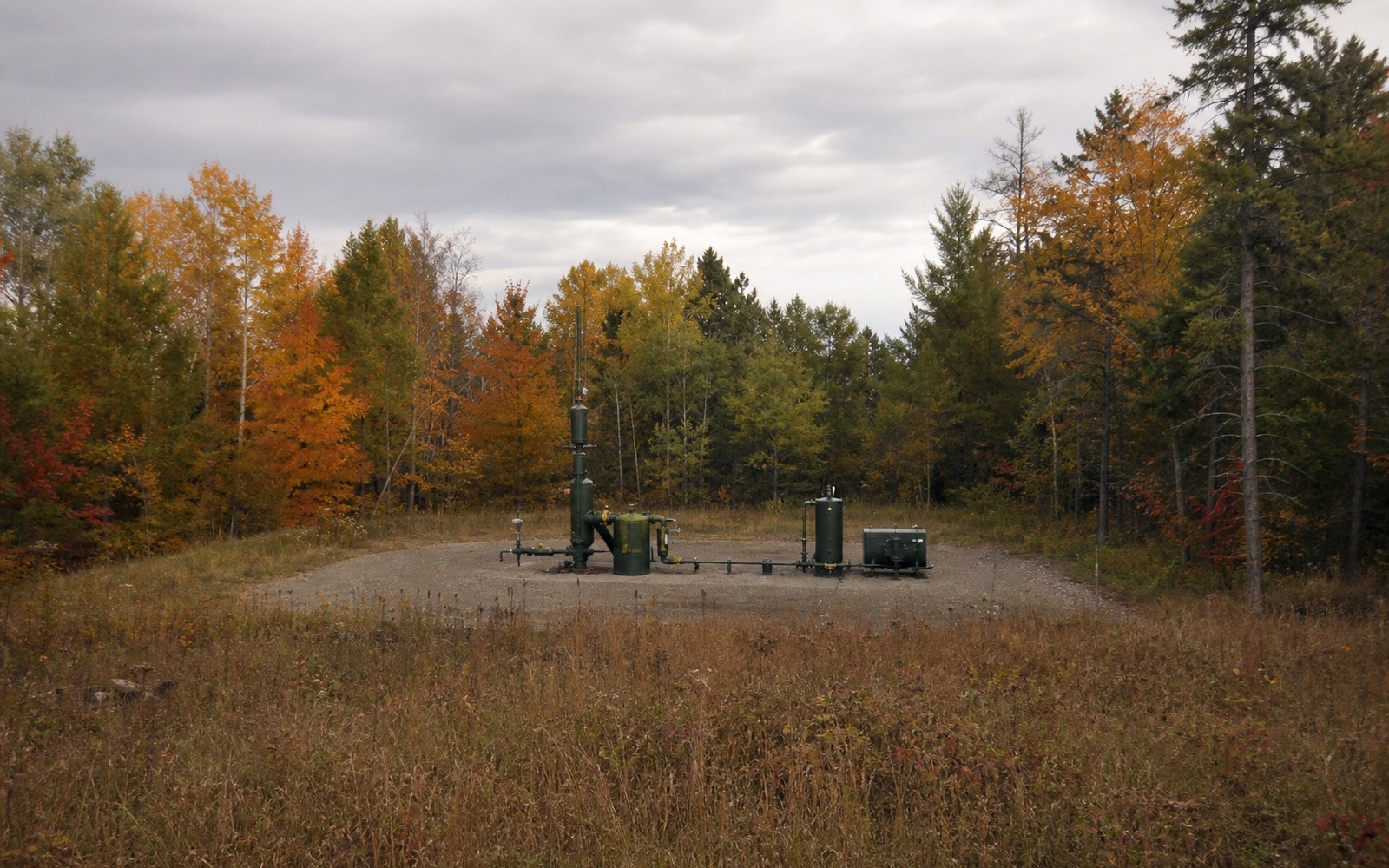
Antrim Shale Mineral Rights
The Antrim isn't a headline shale play, and that's precisely why it's a quietly reliable one for the mineral owners who hold it.
Most people who ask us about the Antrim Shale have never heard the term used anywhere except on their own royalty statement. It's a shallow Devonian shale across the northern Lower Peninsula of Michigan, roughly Otsego, Montmorency, Antrim, and Kalkaska counties, developed heavily through the 1990s with biogenic gas wells that produce differently than anything you'd see in a Texas shale play.
If you inherited an Antrim interest from a parent or grandparent who leased land up there decades ago, you're probably holding one of the flattest, most predictable decline curves in the country. That predictability is actually a selling point, and it changes how a buyer should be pricing your acreage.
Biogenic Gas Behaves Differently Than Thermogenic Shale
Antrim gas is biogenic, generated by bacteria breaking down organic material rather than heat and pressure over geologic time. Wells here are shallow, often under 2,000 feet, and produce along with meaningful volumes of water that has to be handled and disposed of. What matters to you as a mineral owner is that these wells decline slowly and can keep producing small volumes for twenty, thirty, even forty years, which is a very different economic animal than a steep-decline horizontal shale well.
Most of the Play Is Fully Developed
The Antrim was drilled up aggressively in the 1990s and early 2000s, and there's been very little new drilling since. If your minerals are non-producing today, it's likely because the spacing unit around you was already developed decades ago and simply never included your tract, not because operators lost interest in the play generally. That history matters when we're pricing an offer, because non-producing Antrim acreage isn't sitting in front of an active drilling program the way non-producing Permian acreage might be.
Low, Steady Checks Are Normal Here
Antrim royalty checks tend to be modest and stable rather than large and volatile. A well producing 20 or 30 mcf a day at a low operating cost can keep sending small checks for years without much month-to-month movement. When we evaluate a producing Antrim interest, we're looking at that long flat tail and the operating cost structure behind it, not chasing a big number that isn't realistic for this play.
Gas Pricing Sensitivity
Because Antrim wells are pure gas plays with no oil cut and limited NGLs, your royalty is directly exposed to Henry Hub and regional Midwest gas pricing with no oil revenue to cushion a downturn. That's worth understanding before you sell, so you're not comparing your offer to an oil-heavy basin where the economics work completely differently.
Inherited Interests Are Common in This Basin
A large share of the Antrim mineral owners we talk to inherited the interest rather than leasing land themselves, since most of the original leasing happened thirty or more years ago. That often means the current owner has never seen a complete lease file, doesn't know the original bonus terms, and is working off nothing more than a recent division order or a stack of old royalty checks. We can typically identify the well, the operator, and the production history from a county and section alone, so missing paperwork isn't a dealbreaker.
It's also worth checking whether the interest has already been split among siblings or cousins through a prior estate, since Michigan probate records for these older leases sometimes lag behind what's reflected on the current division order.
What a Realistic Antrim Offer Looks Like
Given the long, flat decline curve typical of this play, we build our offer around the trailing production history on your specific well rather than a single recent check that might be seasonally low or high. Michigan gas wells can see some seasonal demand variation, and a single month's statement doesn't always represent the true average. We ask for several months to a year of statements when we can get them, which lets us make a more accurate, defensible offer instead of guessing off one data point.
Questions owners ask
Why does my Antrim Shale check barely change from month to month?
Antrim wells are shallow, low-decline biogenic gas producers that flatten out early in their life and then hold steady for years. Small, consistent checks are typical of this play and not a sign anything is wrong with your interest.
Are new wells still being drilled in the Antrim Shale?
Very little new drilling has happened in the Antrim since the early 2000s, since most of the productive area was already developed. Existing wells continue producing, but you shouldn't expect new development activity in most units.
Is a low-volume Antrim interest even worth selling?
Yes, though the offer will reflect the modest, steady nature of the production rather than a big shale-style number. Many owners still prefer a lump sum today over decades of small monthly checks, particularly for inherited fractional interests.
Does my Antrim mineral interest include the water handling costs?
No, water disposal and handling are operator costs deducted before your royalty is calculated, similar to other deductions on your statement. Your net check already reflects those costs, which is normal for this play.
I inherited this interest and don't have the original lease. Can you still make an offer?
Yes, we can identify your well and pull production history from the county and section alone in most cases. A recent division order or royalty check is usually enough for us to get started.
Want this issue read against your own deed, statements, or offer?
County, legal description, producing status, operator, recent royalty statements, and any offer already received are enough to begin.
Request a Mineral ReviewCall 405-776-9324