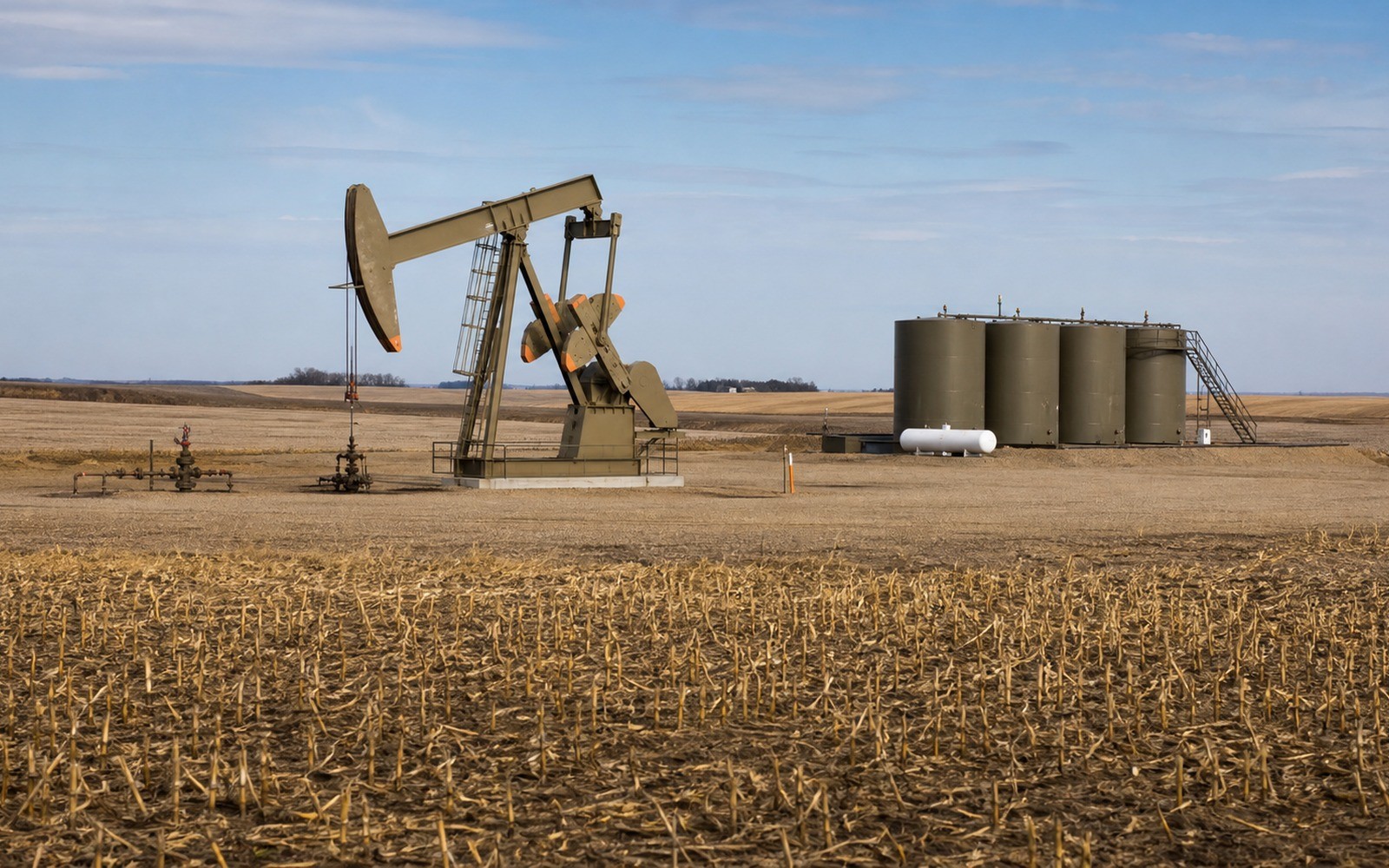
Bakken Mineral Rights
Steep decline curves make the Bakken one of the least forgiving plays for a mineral owner who waits too long to decide what they want out of the interest.
The Bakken is the play that put the Williston Basin on the map, and it's still one of the most oil-weighted horizontal plays in the country. If you're holding minerals in McKenzie, Mountrail, Williams, Dunn, or Burke County, North Dakota, or across the state line into Montana's Richland or Roosevelt County, you're sitting on Middle Bakken and Three Forks pay that behaves very differently than a conventional vertical well.
The thing we always tell Bakken owners is that timing matters more here than almost anywhere else, because these wells lose the majority of their peak production within the first two to three years. That decline curve is the single biggest factor in how we price your interest.
Oil-Weighted With Associated Gas
Bakken wells produce oil first and foremost, with associated gas that historically got flared off before North Dakota tightened capture requirements. Today most operators are required to connect gas gathering before they can keep producing at full rate, which has actually improved the gas revenue line on a lot of Bakken royalty statements over the past several years. Your check is still primarily an oil check, though, so WTI and Bakken differential pricing drive most of the monthly swing.
The Decline Curve Changes Everything About Value
A Bakken well that comes online at 1,000-plus barrels a day can be down to a couple hundred barrels within eighteen months and continue declining from there. That means the value of a producing Bakken interest is heavily front-loaded, and an owner who's several years into production is holding a very different asset than one whose well just came online. When we quote a Bakken interest, we're pulling North Dakota Industrial Commission production records to see exactly where your well sits on that curve.
This is also why Bakken interests sold shortly after first production tend to command stronger offers than interests tied to a well that's been on decline for five or six years, even if both are technically still producing.
Three Forks Adds a Second Zone Underneath
In much of the core Bakken, operators can also target the Three Forks formation directly below the Middle Bakken, which means a single spacing unit can support multiple wellbores stacked at different depths. If your acreage is in a unit where only the Bakken bench has been drilled and the Three Forks is untested, that's a real consideration for future value, since it represents potential additional development on the same minerals.
Spacing Units and Force Pooling
North Dakota uses statutory spacing units, and it's common for unleased minerals to end up force pooled once an operator has enough of the unit under lease to proceed. If you've received a pooling notice from the Industrial Commission, that's worth understanding before you sell, since it affects your royalty rate and whether you have a leased or unleased interest going into any transaction.
Water Handling and Deductions on a Bakken Statement
Bakken wells produce meaningful volumes of produced water that has to be gathered and disposed of, and that cost typically shows up as a post-production deduction alongside gathering and transportation charges for the oil itself. On a mature Bakken well several years into decline, these deductions can represent a larger share of gross revenue than they did when the well was new and volumes were higher, which is worth factoring in when you're comparing your net check to what the well is actually producing at the wellhead.
Questions owners ask
Why did my Bakken royalty check drop so much after the first year?
That's the normal decline curve for a Bakken horizontal well, which loses a large share of its peak rate within the first two to three years. It's expected behavior for this play, not a sign of a problem with the well.
Does an untested Three Forks zone add value to my Bakken minerals?
It can, since additional undrilled pay beneath an existing well represents future development potential. We factor offset Three Forks activity into our offer when your unit hasn't been fully developed yet.
I received a force pooling notice from North Dakota. What does that mean for selling?
Pooling sets your royalty rate and terms for an unleased interest brought into a spacing unit. Once that order is final, we can quote against the specific terms it establishes rather than guessing at your position.
Are Bakken minerals worth more right after a well starts producing?
Generally yes, because early production captures the highest point on the decline curve. Interests tied to newer wells typically price stronger than similar interests several years into decline.
How does the North Dakota gas capture requirement affect my royalty?
Operators now have to connect gas gathering to keep producing at full rates, which has increased gas revenue on many statements that previously showed flared, unpaid volumes. Check your statement for a gas line item that may not have existed a few years ago.
Why are the deductions on my Bakken statement so much higher than a few years ago?
Water handling, gathering, and transportation costs stay relatively fixed as a mature well's oil volume declines, so those deductions take a larger percentage bite out of a smaller check over time. This is a normal pattern as a Bakken well ages.
Want this issue read against your own deed, statements, or offer?
County, legal description, producing status, operator, recent royalty statements, and any offer already received are enough to begin.
Request a Mineral ReviewCall 405-776-9324