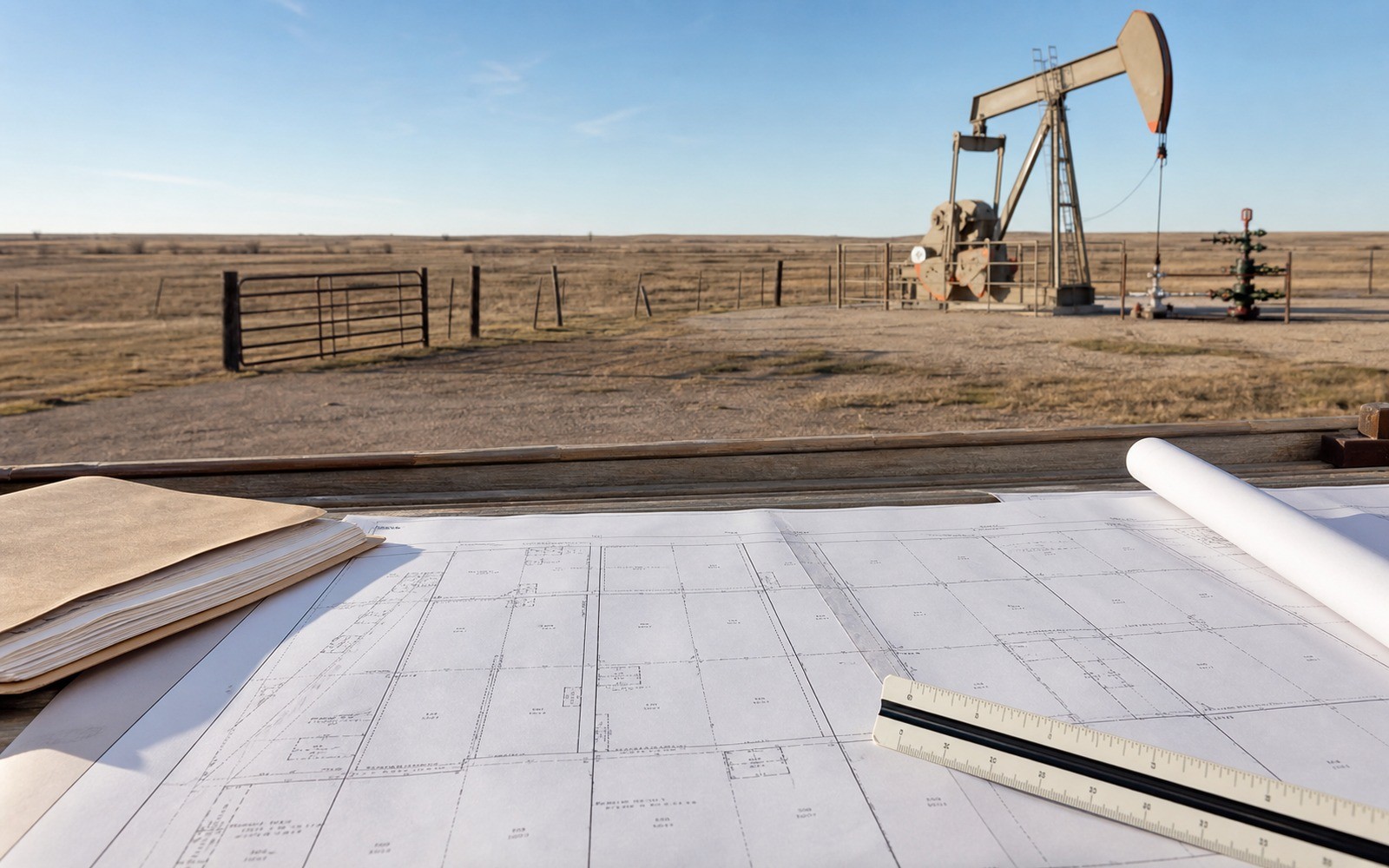
Surface vs. Mineral Estate
Plenty of landowners are surprised to learn they don't own what's under their own property, and plenty of mineral owners are surprised to learn they've never seen the land their minerals sit beneath.
In most oil and gas states, land can be split into two separate legal estates: the surface, everything from the topsoil up, and the minerals, everything of value beneath it. These can be owned by the same person, which is called a fee simple estate, or by two entirely different parties, which is called a split estate, and split estates are extremely common in legacy oil and gas regions where a deed reservation decades ago separated the two permanently.
Understanding which estate you own, and what rights come with it, matters a great deal for anyone deciding whether to sell. A surface owner and a mineral owner are dealing with completely different assets, different buyers, and different value drivers, even on the exact same piece of ground.
How the split happens
The most common way a split estate gets created is a mineral reservation: a landowner sells the surface but reserves the minerals in the deed, or sells the minerals while keeping the surface. It also happens through inheritance, when one heir receives the land and another receives the mineral rights under a will, or through a straightforward mineral deed where an owner sells just the subsurface rights to a separate buyer while continuing to farm or live on the land above.
Once split, the two estates can be transferred, inherited, and sold completely independently from that point forward. It's entirely normal for a surface tract to have changed hands five times while the mineral rights beneath it stayed in the same family the entire time, or the reverse.
Why the mineral estate is generally dominant
In most states that follow the traditional split-estate doctrine, the mineral estate is considered dominant, meaning the mineral owner, or an operator leasing from them, has an implied right to reasonable access to the surface to develop the minerals, even without the surface owner's consent. That access right is typically limited to what's reasonably necessary and increasingly constrained by state surface-owner protection statutes requiring notice, bonding, or compensation for surface damage.
This dominance is exactly why surface owners sometimes get frustrated learning an operator can access their land for drilling without their sign-off, and it's exactly why mineral owners retain real value even when they have no relationship at all with whoever currently owns the surface.
Valuing a mineral estate versus a surface estate
A surface estate is valued the way any land is, agricultural productivity, development potential, access, and location relative to towns and infrastructure. Oil and gas activity underneath can add a surface damage or use-agreement component but generally doesn't drive the core value the way it does for the mineral estate itself.
A mineral estate's value is driven entirely by different factors: whether it's producing or non-producing, what formation and depth interval the deed covers, and how active operators are in the surrounding area. The two estates can move in completely opposite directions in value over time, a tract can become worthless for farming while the minerals beneath it become extremely valuable once a new play is discovered, or the reverse.
What we help with as mineral buyers
We buy mineral and royalty interests, not surface land, so if you're holding a split estate and want to sell only the minerals while keeping the land, or vice versa selling the land through a real estate agent while keeping the minerals, that's a completely normal and common structure. Confirming exactly which estate your deed conveys, sometimes surface deeds include ambiguous language that unintentionally implies mineral rights too, is one of the first things we check before making an offer.
If you're not sure whether you own the surface, the minerals, or both, pulling the recorded deed from the county clerk's office is the fastest way to find out, and it's a step we help owners through regularly when the deed history is unclear or several generations old.
Questions owners ask
How do I know if I own the mineral rights under my land?
Pull your deed from the county clerk and read the granting or reservation language carefully. Some deeds explicitly reserve minerals to a prior owner, which means your surface deed alone doesn't include them.
Can an operator drill on my property if I only own the surface?
In most states, yes, subject to reasonable use standards and, increasingly, state notice and compensation requirements for surface damage. The mineral estate's access rights generally take priority, though the specifics vary by state.
Can I sell my mineral rights while keeping the surface land?
Yes, this is a common and straightforward transaction. Selling the minerals doesn't affect your ownership or use of the surface, aside from the operator's access rights that already existed regardless of who owns the minerals.
What if my deed doesn't clearly say whether minerals were included?
Older deeds sometimes have ambiguous language that requires a title search or attorney review to interpret correctly. We routinely research county records to clarify exactly what's owned before making an offer.
Want this issue read against your own deed, statements, or offer?
County, legal description, producing status, operator, recent royalty statements, and any offer already received are enough to begin.
Request a Mineral ReviewCall 405-776-9324